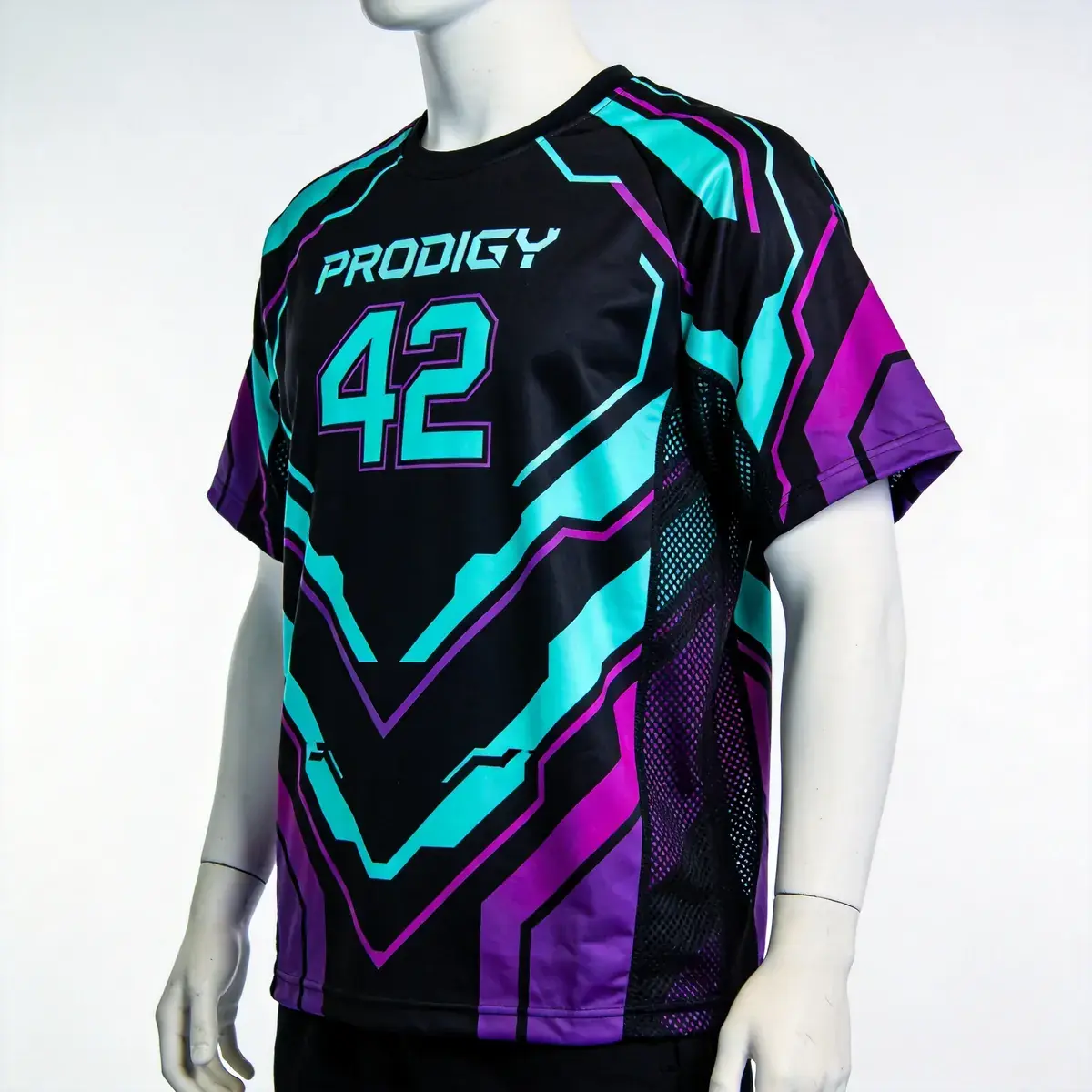
If you've ever bought a polyester jersey, a cycling kit, or an esports uniform with vivid edge-to-edge artwork that didn't peel after 50 washes, you were looking at sublimation printing. It is the gold-standard method for full-coverage apparel — and the only decoration technique that can print edge to edge with no print area limits.
This guide explains exactly what sublimation printing is, how it works, when to use it (and when not to), and what it costs. We have been running industrial sublimation lines in our Yiwu factory for over a decade — everything below is from production experience, not textbook theory.
01.How Sublimation Printing Works
Sublimation uses heat to turn solid dye into a gas without passing through a liquid phase. The dye gas bonds with polyester fibers at the molecular level — so the print is not sitting on top of the fabric. It is part of the fabric. That is why sublimated prints never peel, crack, or fade for the life of the garment.
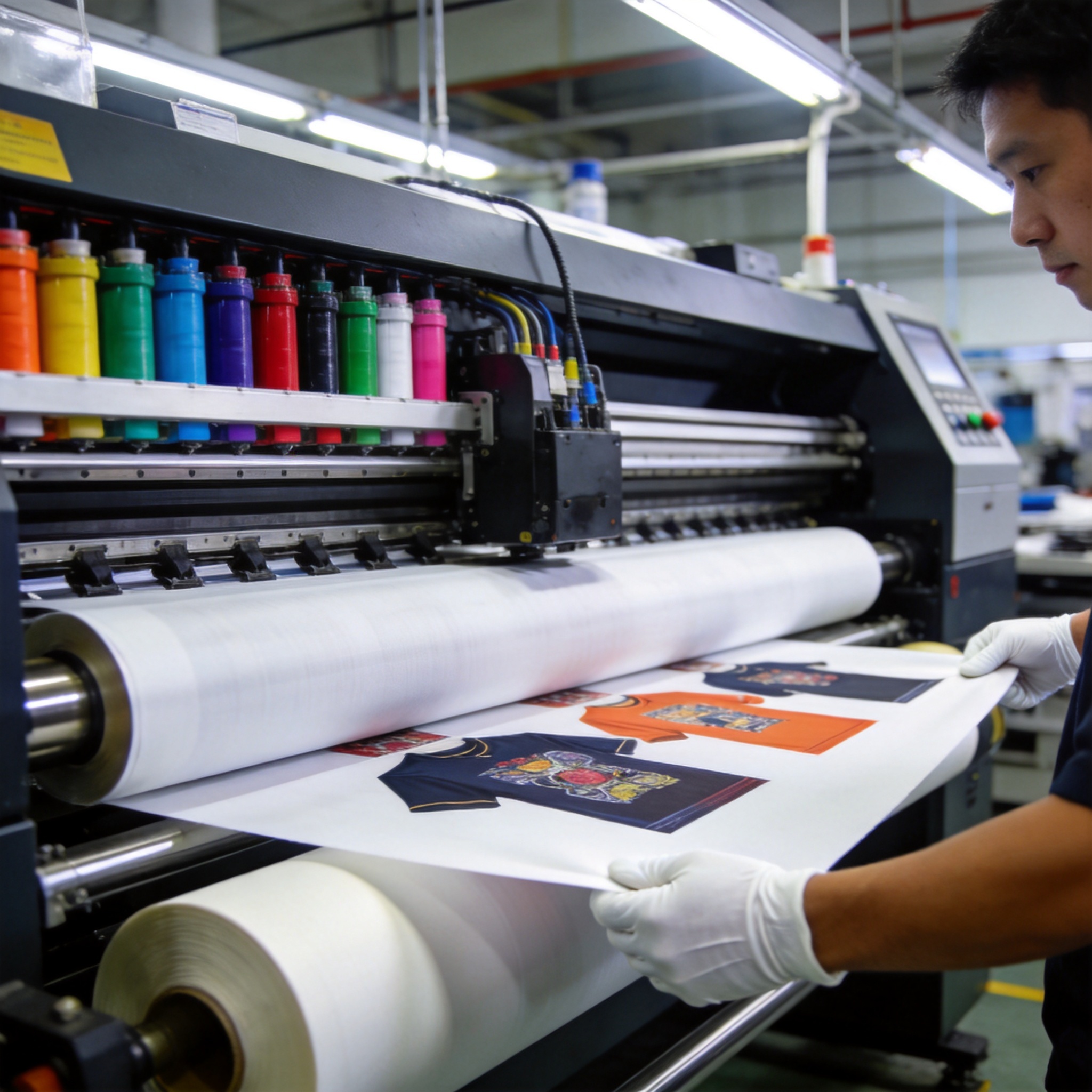
The process: your artwork is printed onto transfer paper using water-based sublimation ink. The paper is placed on the fabric and heat-pressed at around 200°C for 30 seconds. Under heat and pressure, the dye sublimates (solid → gas) and bonds with the polyester fibers. The transfer paper is removed, leaving the print behind.
02.What Fabrics Can You Sublimate?
Sublimation only works on polyester — and the higher the polyester content, the more vibrant the result. 100% polyester gives the brightest, most color-accurate prints. Polyester blends (65/35, 50/50) work but with reduced vibrancy on the cotton portion.
Cotton does not accept sublimation dye. If you need an all-over print on cotton, you have two real options: (1) DTG, which has a smaller print area and is slower, or (2) DTF transfers, which work on any fabric but don't have the soft hand-feel of true sublimation.
03.Why Sublimation Is the Best Choice for All-Over Print
Most decoration methods have a print area limit. Screen print is limited to a chest print or back print. Embroidery is limited to a small logo. Sublimation has no print area limit — you can print the entire garment, every panel, edge to edge.
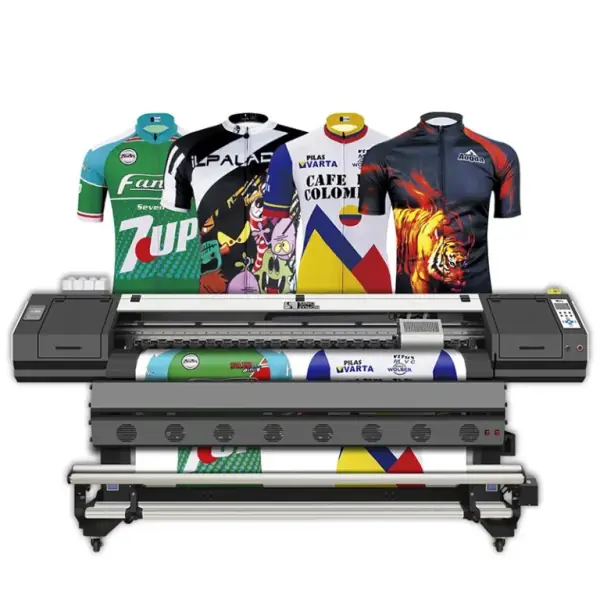
This makes sublimation the only realistic option for: all-over print streetwear, full-coverage esports jerseys, cycling kits, racing suits, festival merch, and any design where the artwork is the garment. With our 1.9m wide-format printers, we can print full panels together so they align perfectly when sewn — no visible seams breaking up the design.
04.Cost, MOQ, and Lead Time
Sublimation is cost-effective for runs as small as 50 pieces, with the price-per-piece dropping significantly at 200, 500, and 1,000+ piece runs. Setup is much lower than screen printing because there are no screens to make.
Lead time is typically 15-25 days including sampling. Sampling (1-3 strike-off pieces) takes 7-10 days. Bulk production after sample approval is 10-15 days for a 500-piece order.
05.When NOT to Use Sublimation
Three situations where sublimation is not the right call: (1) 100% cotton garments — sublimation dye won't bond; (2) small chest-only prints on a tight budget — screen printing is cheaper at high volume; (3) premium logo decoration where you want a stitched texture — use embroidery instead.
If you are not sure which method fits your project, send us your design and garment spec. We will tell you the right method — even if it is not sublimation.
?Frequently Asked Questions
What is sublimation printing in simple terms?
Sublimation printing is a process that uses heat (around 200°C) and pressure to turn solid dye into a gas, which then bonds with polyester fibers at the molecular level. The result is a print that becomes part of the fabric — not a layer on top — so it never peels, cracks, or fades for the life of the garment.
Does sublimation printing work on cotton?
No. Sublimation dye only bonds with polyester (and polyester-rich blends). 100% cotton cannot be sublimated because the dye has no synthetic fiber to bond with. For cotton apparel with all-over print, we recommend DTF (Direct-to-Film) transfers, which work on any fabric and are widely used as the cotton-friendly alternative to sublimation.
How long does sublimation printing last?
Sublimation prints last the full life of the garment. Because the dye becomes part of the polyester fiber (not a coating on the surface), the print cannot peel, crack, or wash out. Our factory's standard wash test is 50+ cycles with no visible fade — in real-world use, sublimated jerseys and t-shirts routinely last 5+ years of regular wear and washing.
Is sublimation better than screen printing?
For all-over print, full-coverage artwork, and edge-to-edge designs: yes, sublimation is far better. Screen printing is limited to a defined print area (chest, back, sleeve) and adds a layer on top of the fabric. Sublimation has no print area limit and produces a softer hand-feel because the dye is inside the fabric. For simple 1-2 color logos on a budget, screen printing is cheaper.
What is the minimum order quantity for sublimation printing?
Our minimum order quantity for custom sublimated apparel is 50 pieces per design, per size run. This is the industry-standard MOQ that allows us to set up the printer, calibrate colors, and run production economically. We can do smaller runs (sample or rush) at a higher per-piece price — contact us for a quote.
Ready to start?
Get a custom quote in 24 hours.
Send us your design, quantity, and deadline. We will recommend the right technique and provide a transparent DDP quote including shipping to your door.
Get a Free Quote