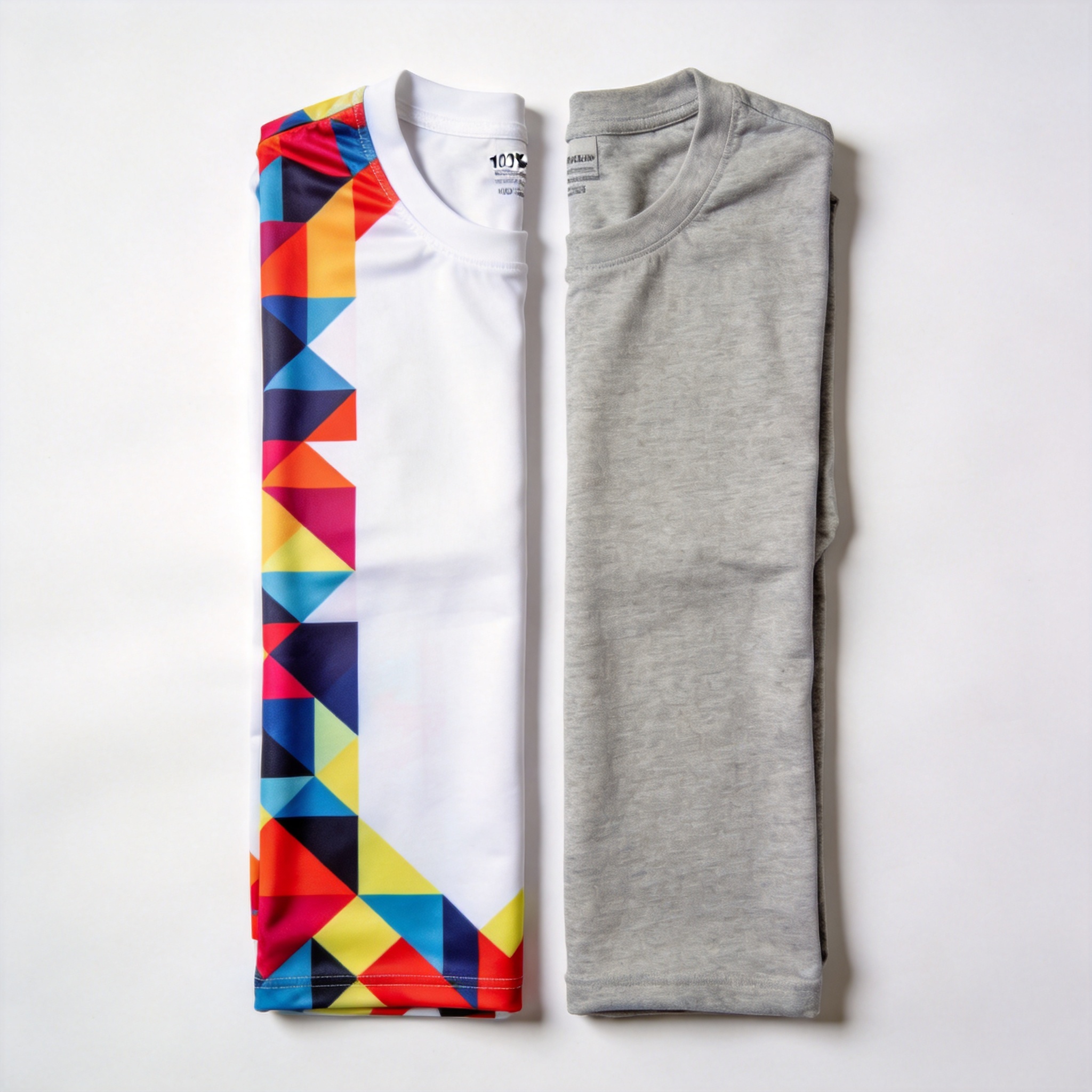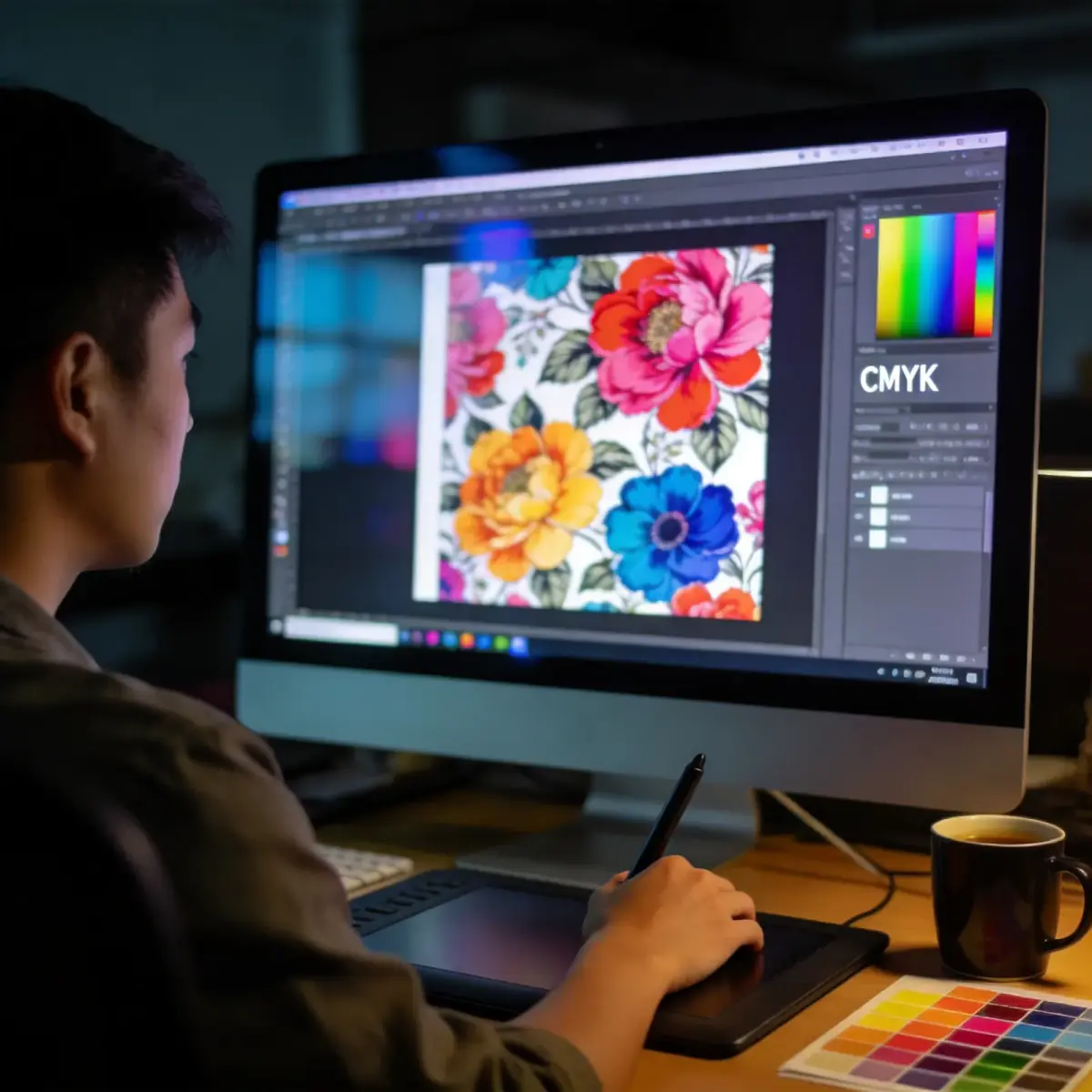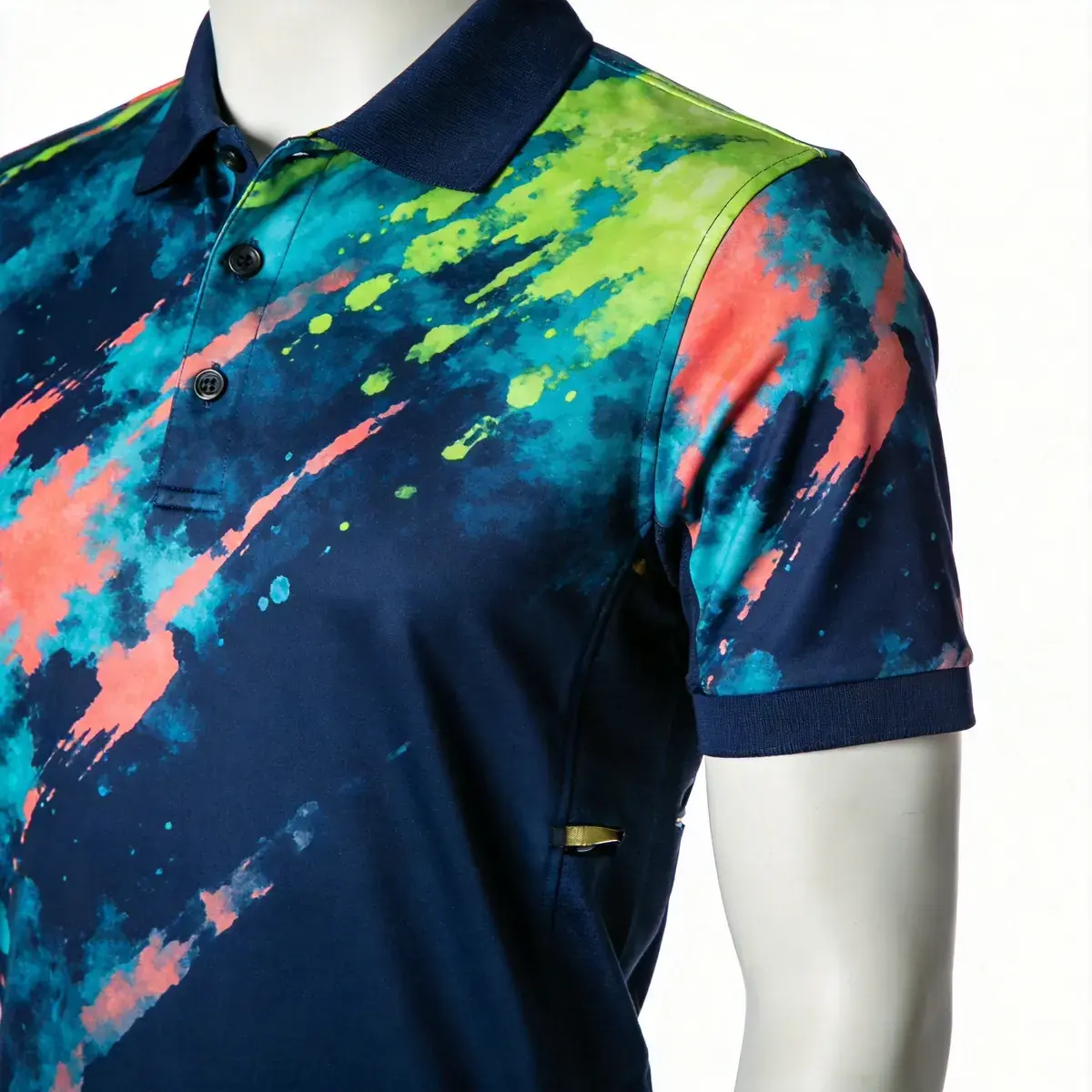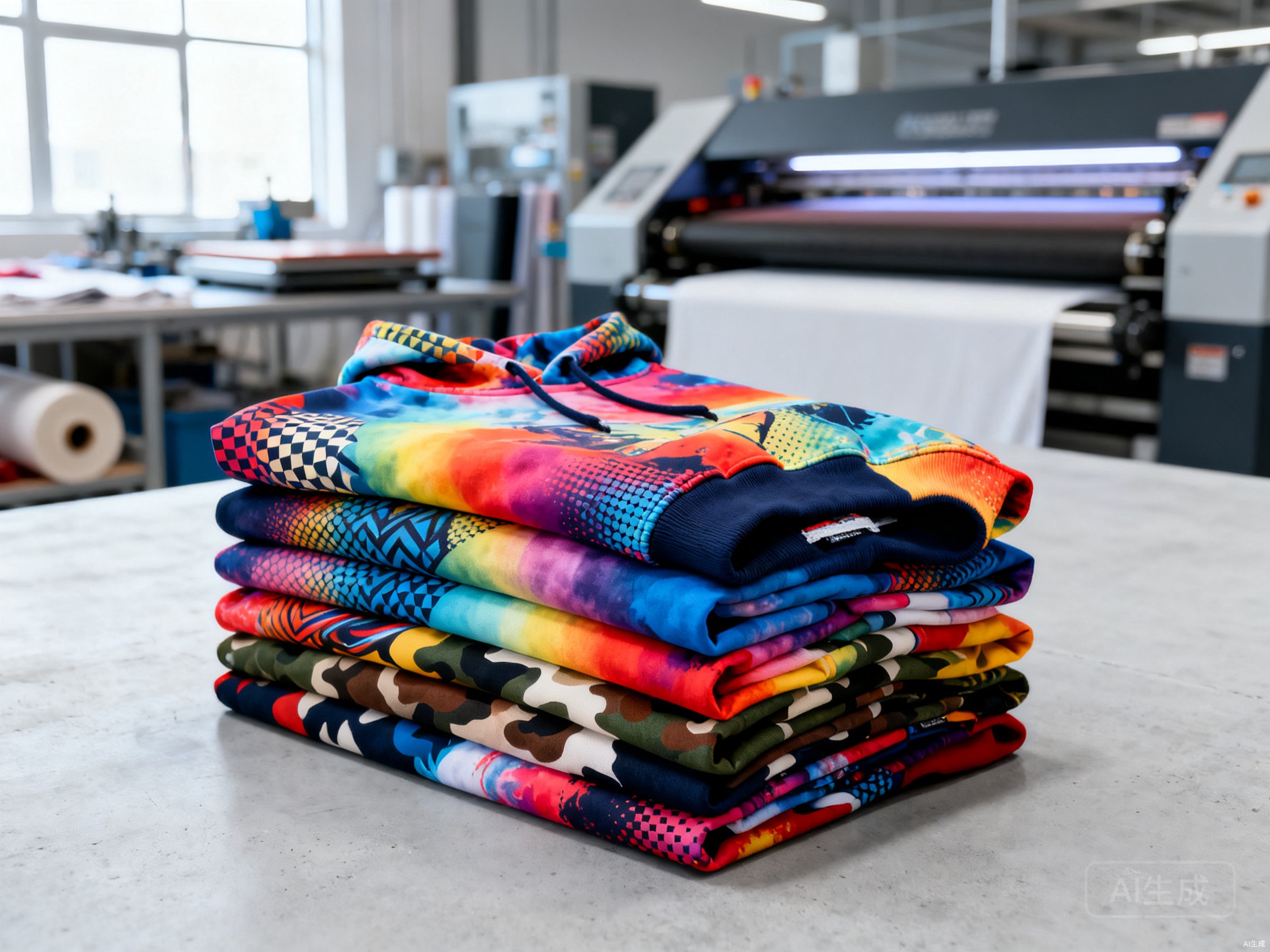
Custom hoodies have quietly become the highest-margin category in custom apparel. Esports orgs want them as merch drops, breweries and coffee shops want them as staff uniforms that customers actually buy, and corporate programs want them as retention gifts that do not end up in a drawer. The problem: a hoodie is a far more complex garment than a T-shirt, and far more ways to get it wrong.
We run a 2,000 m² sublimation and cut-and-sew factory in Yiwu, and hoodies are one of our top three categories by order volume. This guide is the checklist we walk every new hoodie client through — fleece weights, panel construction, print method trade-offs, honest 2026 pricing, and the QC checkpoints that separate a hoodie that sells for three years from one that pills and twists after ten washes.
01.Why Sublimated Hoodies Are Different From Sublimated T-Shirts
On a T-shirt, sublimation is simple: print the whole fabric roll, cut the pattern pieces, sew. The fabric is the print. A hoodie adds three complications that a T-shirt never has.
First, fleece is thick. Standard sublimation works best on 140 to 180 gsm jersey knits where the ink penetrates the full yarn. Hoodie fleece runs 280 to 400 gsm, so the print surface is a brushed or loop-back side of a denser knit — colors land slightly muted unless the factory dials in press time and temperature for that specific fleece. Ask any supplier what press profile they use on fleece; if they quote the same 200°C / 40s profile they use on T-shirt jersey, your colors will drift.
Second, a hoodie has more panels and more seams. Shoulders, sleeves, hood, pocket, cuffs, waistband — each seam is a chance for print misalignment between panels. On an all-over-print hoodie, the pattern should flow continuously across those seams. That only happens when the factory marks registration points on every panel before cutting, which is exactly the same discipline we described in our guide to the sublimation printing process.
Third, trims matter more. Drawcords, metal eyelets, zipper tape (on full-zip styles), and cuff ribbing are all visible, tactile components. A cheap drawcord tips the perceived quality of an otherwise perfect hoodie. Budget for trims deliberately — they are usually less than $0.50 per piece and they move the perceived value by $15 or more.
02.Fleece Weight Explained: 280, 320, 360, and 400 gsm
Fabric weight is the single biggest cost and quality driver in a hoodie, and it is also the spec buyers most often leave vague. Here is what each weight band is actually for.
280 to 300 gsm — lightweight fleece. This is the right choice for spring/fall merch, gym wear, and markets with warm climates (Southeast Asia, Gulf states, southern US). It prints beautifully, dries fast, and keeps the per-piece cost low. It is not a winter garment, and customers will notice.
320 to 340 gsm — the workhorse. This is what 70% of our custom hoodie orders use. Heavy enough to feel substantial, light enough to wear indoors. If you are buying hoodies for staff uniforms, event merchandise, or general brand merch, start here.
360 to 400 gsm — premium / winter. Noticeably denser, with a brushed interior that reads as 'premium' the moment someone puts it on. Choose this for esports merch drops, retail-grade brand apparel, and anything positioned above the $45 retail mark. Cost impact versus 320 gsm is roughly $1.50 to $2.50 per piece at factory level — retail perception impact is much larger.
One spec trick: always ask for fabric weight in gsm (grams per square meter) in writing on the PI, not in vague terms like 'heavyweight'. A 'heavyweight hoodie' can mean anything from 280 to 450 gsm depending on who you ask, which is exactly how buyers end up with a lighter garment than they approved. Our guide to choosing fabric for esports jerseys covers how we write fabric specs into proforma invoices.
03.All-Over Print Construction: Panel Sublimation vs Cut-and-Sew
There are two honest ways to make an all-over-print hoodie, and one dishonest way. Know which one you are buying.
Panel sublimation (the standard method). The pattern is printed on white polyester fleece in panel-sized pieces, then each panel is cut and sewn. Seams will interrupt the pattern slightly — a good factory aligns registration marks so the interruption is barely visible. This is the method used by 95% of commercial sublimated hoodies, including most retail brands. It supports full-width hoods, side pockets, and true raglan sleeves.
Cut-and-sew from continuous print. For patterns that must flow uninterrupted (large geometric or photographic designs), the factory prints continuous fabric and cuts strategically so seams land inside dark areas of the design. This costs more in fabric waste (often 15 to 25% extra yardage) but produces the cleanest all-over look. It is what we use for esports and streetwear clients whose designs have strong directional patterns.
The dishonest method to avoid: 'sublimated front panel, blank back'. Some suppliers quote a suspiciously low price for an 'all-over hoodie' that is actually a blank imported hoodie with one printed front panel heat-pressed on. The print cracks at the seam edges within a few washes. Ask specifically: is the fabric itself printed before cutting, or is a panel printed and stitched onto a blank body? The price difference between the two is about 30 to 40% — if a quote looks too good, this is usually why.
04.Realistic 2026 Pricing: What a Factory-Direct Hoodie Costs
Hoodie pricing scales with fabric weight, construction complexity, and order quantity. These are the realistic factory-direct ranges for a fully custom, all-over sublimated pullover hoodie in October 2026, FOB Ningbo, at 50 to 300 pieces per design.
280 to 300 gsm lightweight pullover: $9.50 to $13.50 per piece. 320 to 340 gsm standard pullover: $11.00 to $15.50. 360 to 400 gsm premium pullover: $13.00 to $18.50. Full-zip versions add $2.50 to $4.00 per piece depending on zipper quality (YKK adds about $1.20 over generic zippers). Embroidered chest logos add $1.00 to $2.50 depending on stitch count.
Below 50 pieces per design, factories either refuse the order or pool it — the same dynamic we explain in our MOQ breakdown. At 500+ pieces, expect 8 to 15% off the ranges above. At 1,000+ pieces, 15 to 25% off.
Two costs buyers forget to budget: sampling ($80 to $150 for a hoodie sample including courier) and freight. A 340 gsm hoodie weighs about 550 to 650 g with packaging, so a 200-piece order is roughly 120 to 130 kg — around $550 to $800 by DDP air to the US, or $350 to $550 by DDP ocean with a 45 to 60 day door-to-door timeline. Our DDP shipping guide breaks down exactly what 'delivered duty paid' should include on your quote.
If a quote lands dramatically below these ranges — a '360 gsm all-over sublimated hoodie for $6.50' — one of three things is happening: the fabric is lighter than claimed, the print is a front-panel patch rather than true sublimation, or the fleece is recycled/blended in a way that will pill within ten washes. All three are verifiable with a pre-production sample, which is why we never skip that step.
05.The 4 QC Checkpoints That Decide Hoodie Quality
T-shirts fail QC on print color. Hoodies fail on four additional axes, and each one needs its own checkpoint before bulk production ships.
1. Shrinkage and twist. Fleece that has not been relaxed before cutting will shrink unevenly after the first two washes — sleeves twist, the body torques, the hem rides up. The fix happens at fabric stage: the factory must relax (pre-shrink) the fleece roll for 24 to 48 hours before cutting. Ask your supplier how they relax fleece; 'we just cut it' is a red flag. Acceptable post-wash spec: under 3% shrinkage, under 1.5% twist.
2. Pilling resistance. Brushed fleece pills when the short fibers work loose. Pilling is graded on a 1 to 5 scale (5 = no pilling); accept nothing below grade 4 after a standard 2,000-cycle Martindale test. Recycled polyester blends are the usual culprit — they are cheaper and greener on paper but pilling performance varies wildly by supplier. If you spec recycled fleece, demand the pilling certificate for the actual roll, not a generic fabric datasheet.
3. Seam strength at high-stress points. The hood-to-collar seam and the pocket openings carry the most load. A stitch density below 10 stitches per inch, or cheap overlock thread, fails here first. The QC test is simple: pull the hood seam firmly in both directions on the sample. If you can see thread gap or hear popping, reject the sample.
4. Print alignment across panels. On an all-over design, check that the pattern meets at the shoulder seams, side seams, and hood center-back within 2 to 3 mm. This is exactly the registration discipline our artwork preparation guide asks designers to build into their files — mirrors, symmetry, and continuous flow make alignment verifiable at a glance.
All four checkpoints belong in your pre-shipment AQL inspection, not just on the golden sample. Our factory runs AQL 2.5 final inspection per ISO 2859-1 on every hoodie order, and we mark the four checkpoints explicitly on the inspection report so buyers can verify remotely with photos.
06.Lead Times, Sampling, and How to Start an Order
A realistic custom hoodie timeline from first contact to your warehouse door: sample production 10 to 14 days (hoodies sample slower than T-shirts because of trims), courier 3 to 5 days, sample approval and revision 3 to 7 days, bulk production 20 to 30 days, AQL inspection and export clearance 5 to 8 days, then DDP freight — 5 to 8 days by air or 25 to 35 days by ocean to the US, similar to EU hubs.
Plan 6 to 7 weeks total by air, 10 to 12 weeks by ocean, from tech pack to doorstep. If your launch date is closer than that, talk to the factory before committing the date — a plan B (simplified trim package, split shipment with the first 100 pieces by air) is much easier to arrange before production than after.
To start with us: send your artwork or tech pack (a reference hoodie photo plus your logo works too — we draft the spec sheet for you), and we return a quote within 24 hours with FOB and DDP pricing, fabric options at two or three weights, and a sample plan. Browse the hoodie lineup in our product catalog to see construction options, or look at real delivery outcomes in the case study gallery. For teams and organizations planning seasonal drops, the 90-day program walks through the full calendar from design lock to re-order.
?Frequently Asked Questions
What is the minimum order for custom sublimated hoodies?
For a single design in a single colorway, the realistic factory-direct MOQ is 50 pieces. Below 50 pieces the factory loses money on fabric setup and changeover, so suppliers either refuse the order or pool it with other buyers, which adds 30 to 50% to the per-piece price. Full-zip styles and 400 gsm premium fleece sometimes carry a 100-piece MOQ because of trim and fabric minimums from the mill.
Can hoodies be sublimated on cotton or cotton-blend fleece?
True dye-sublimation bonds only with polyester, so all-over-print hoodies require polyester fleece (recycled rPET options exist). For cotton-dominant hoodies, the honest options are: screen printing or DTF for limited-color designs, or a hybrid where the body is cotton and printed panels are polyester. All-over edge-to-edge printing on 100% cotton fleece is not currently achievable with wash-fast results — any supplier claiming otherwise is using a coating that will wash out.
How much does a custom all-over-print hoodie cost in 2026?
Factory-direct, fully custom, all-over sublimated pullover hoodie at 50 to 300 pieces: roughly $9.50 to $13.50 per piece at 280 to 300 gsm, $11.00 to $15.50 at 320 to 340 gsm, and $13.00 to $18.50 at 360 to 400 gsm. Add $2.50 to $4.00 for full-zip construction and $1.00 to $2.50 for embroidered chest logos. DDP air freight to the US adds roughly $3 to $6 per piece depending on order size.
How should I wash a sublimated hoodie to make the print last?
Sublimation ink is inside the fiber, so the print itself does not crack or peel — garment care is about protecting the fleece. Machine wash cold or 30°C inside out, skip fabric softener (it coats the fibers and accelerates pilling), tumble dry low or hang dry, and do not iron directly on the print. Followed properly, a 340 gsm sublimated hoodie should hold print vibrancy and shape through 50+ wash cycles.
Ready to start?
Get a custom quote in 24 hours.
Send us your design, quantity, and deadline. We will recommend the right technique and provide a transparent DDP quote including shipping to your door.
Get a Free Quote