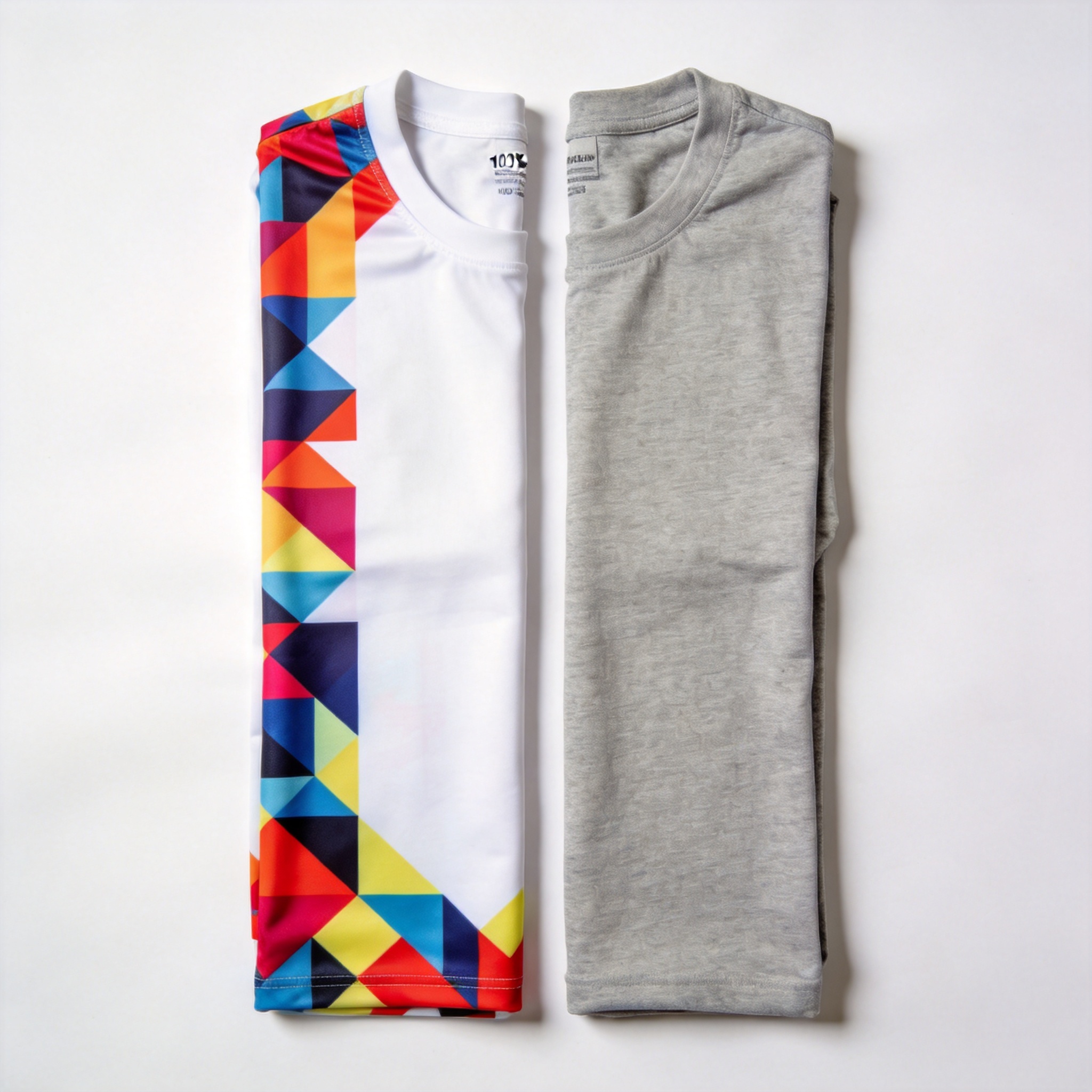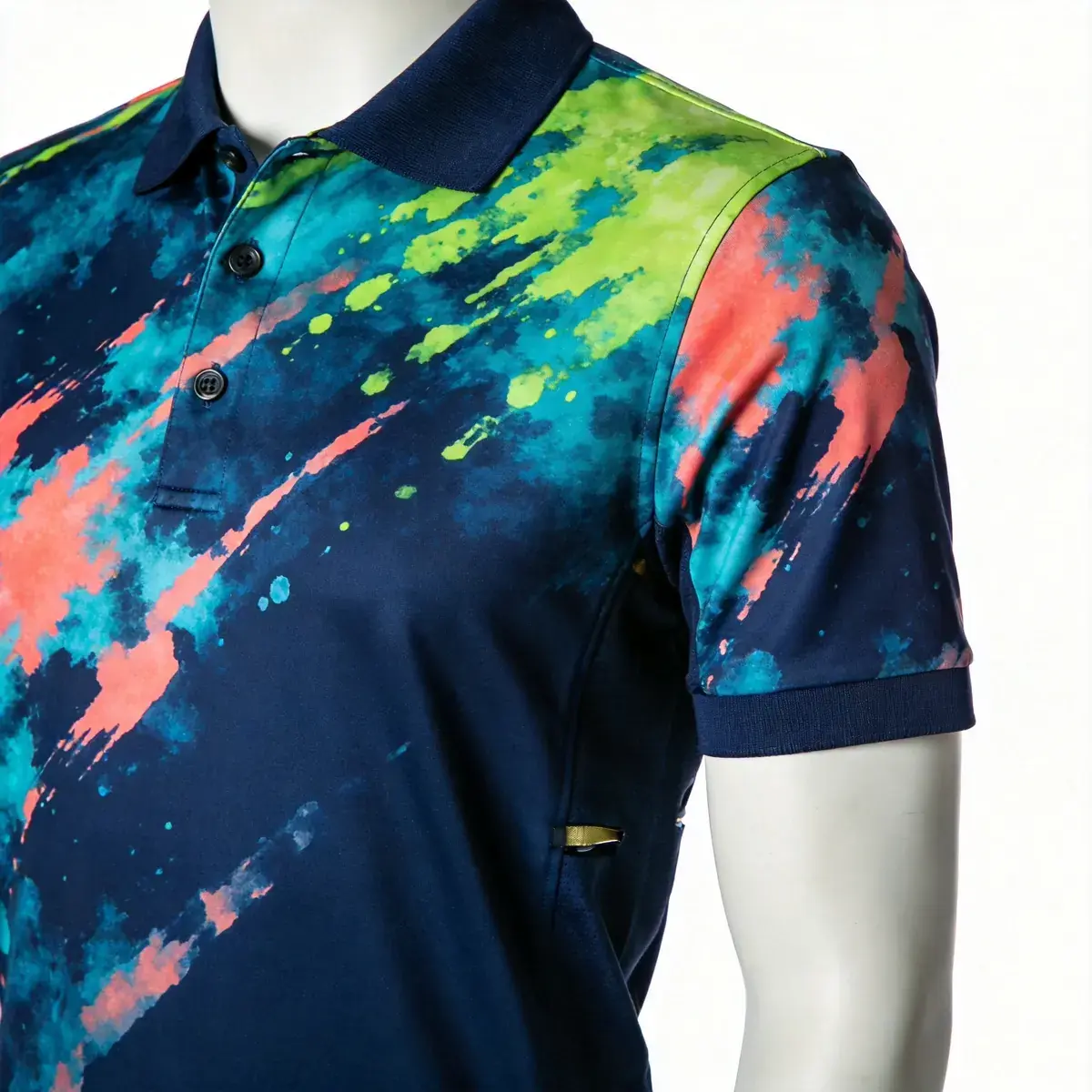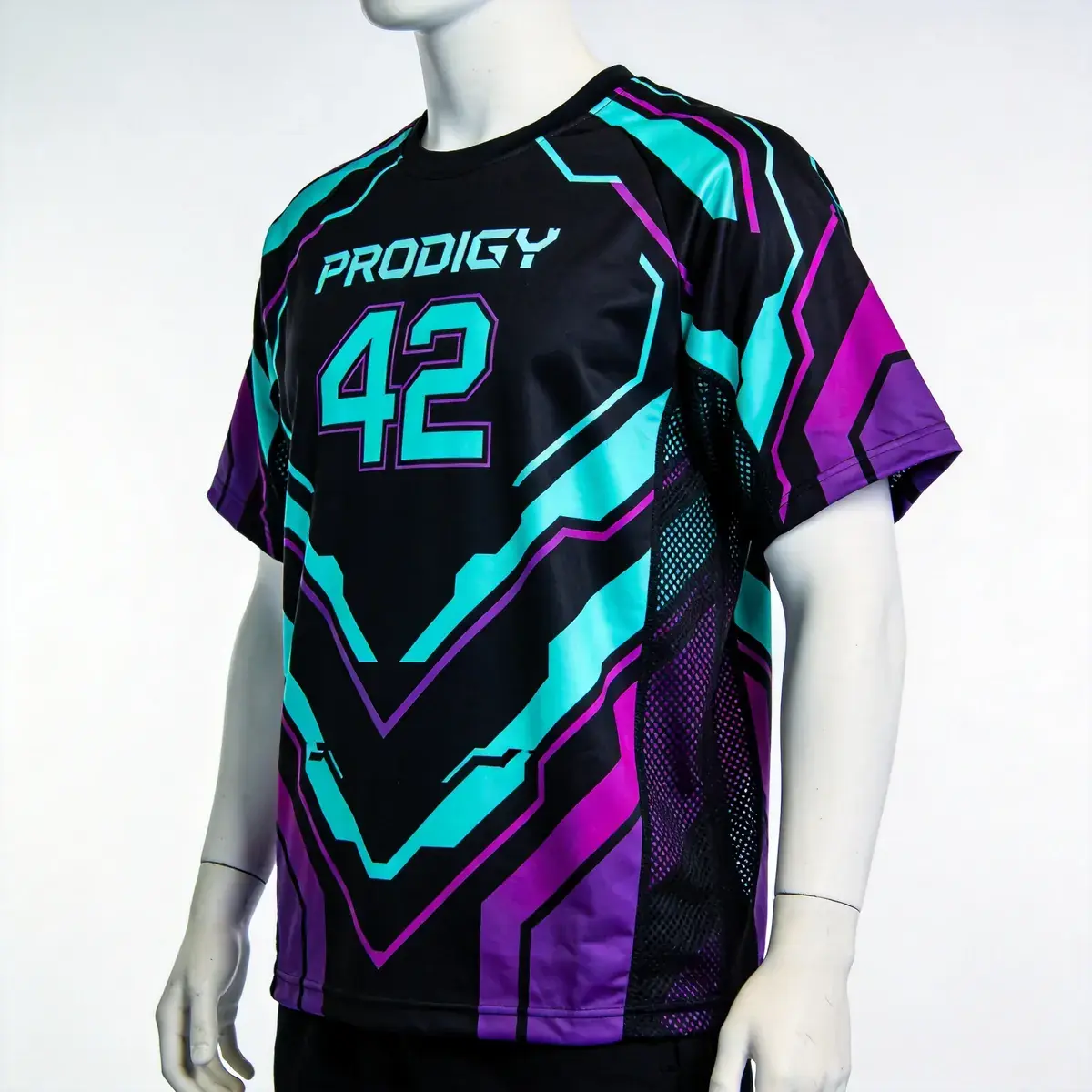
Esports jerseys are not just team merch — they are performance apparel. Players sit in climate-controlled studios for 8-12 hours straight, often under hot stage lights. The wrong fabric choice leads to discomfort, sweat stains, and a jersey that looks tired after one wash.
This guide explains what fabric esports teams and tournament organizers should use, what GSM (grams per square meter) works best, and what to avoid. We have made jerseys for 100+ esports teams and tournaments — everything below is based on what actually performs.
01.The One Rule: 100% Polyester for Sublimation
If you want true all-over print, edge-to-edge artwork, vibrant colors that don't fade, and a print that lasts the life of the garment — 100% polyester is the only choice. The sublimation dye bonds with polyester fibers, giving you everything sublimation is known for.
Avoid cotton and cotton-blend jerseys. The sublimation print will be washed-out and patchy on cotton. Screen printing on a cotton jersey will give you a chest print only, no all-over artwork. For esports, polyester is non-negotiable.
02.GSM: What Weight Works Best?
GSM (grams per square meter) is the standard measure of fabric weight. For esports jerseys, we recommend 140-160 GSM. This is light enough for breathability and comfort under hot stage lights, but heavy enough to drape well and not look cheap.
Below 130 GSM: too thin, looks see-through, doesn't drape properly. Above 180 GSM: too heavy for stage wear, players get hot. The 140-160 GSM range is the sweet spot.
03.Moisture-Wicking vs Regular Polyester
Moisture-wicking polyester (also called performance polyester or coolmax) pulls sweat away from the skin and dries faster than regular polyester. It is more expensive, but for competitive esports where players are under hot lights for hours, the comfort difference is noticeable.
For tournament jerseys (where players wear them once or twice during an event), regular polyester is fine. For team practice jerseys (where players wear them 3-4 times a week), moisture-wicking is worth the upgrade.
04.Stitching and Construction
Esports jerseys are subjected to lots of arm movement (leaning forward, celebrating, mouse-clenching). The stitching needs to hold up. We use flatlock seams on the side panels and shoulder seams — they lie flat against the skin and don't chafe under movement.
Avoid jerseys with raised seams or cheap overlock stitching in stress areas. They will pop after a few wears. Always ask for samples and stress-test the seams before bulk production.
05.What to Avoid
Cotton or cotton-blend fabrics (no all-over sublimation). Polyester below 130 GSM (too thin). Raised seams in stress areas (will pop). V-neck or scoop neck (pro teams prefer crew or mock neck for stage photos). Matte fabric for the inside (smooth interior feels better on the skin).
Cheap thread that doesn't match the fabric color (visible on inside seams). Stiff collars that lose shape after washing. Buttons on jerseys (snag on headsets and armrests).
?Frequently Asked Questions
What is the best fabric for esports jerseys?
The best fabric for esports jerseys is 100% polyester bird-eye mesh or interlock knit, 140-160 GSM. Bird-eye mesh is the most popular because it is breathable, lightweight, and shows sublimated artwork vividly. For long-sleeve or premium lines, we recommend 200-220 GSM interlock polyester for a more substantial feel.
Is polyester good for gaming jerseys?
Yes — polyester is the standard fabric for esports jerseys. It accepts sublimation ink (essential for the all-over prints that gaming jerseys are known for), it is breathable, it wicks moisture, and it holds its shape after washing. Cotton is not suitable for esports because it cannot be sublimated and holds sweat.
What GSM is best for esports jerseys?
140-160 GSM is the sweet spot for short-sleeve esports jerseys. This weight is light enough for tournament play (players wear them for hours) but opaque enough to look premium. For long-sleeve or training jerseys, 180-220 GSM is more appropriate. Anything under 120 GSM looks cheap; anything over 240 GSM is too heavy for indoor gaming.
Should I use mesh fabric for esports jerseys?
Yes, mesh fabric (bird-eye or eyelet mesh) is the most popular choice for esports jerseys because it is highly breathable and shows sublimated colors vividly. Solid interlock is used for the front panel and sponsor logos where you want a smoother surface. Many of our customers use a mesh body with solid shoulder panels for a pro look.
Can I make esports jerseys with recycled polyester?
Yes. Recycled polyester (rPET) from post-consumer plastic bottles is increasingly popular for esports jerseys, especially for brands with sustainability commitments. The print quality, feel, and durability are nearly identical to virgin polyester. Minimum order quantities for rPET are usually 100-200 pieces per design — slightly higher than our standard 50-piece MOQ for virgin polyester.
Ready to start?
Get a custom quote in 24 hours.
Send us your design, quantity, and deadline. We will recommend the right technique and provide a transparent DDP quote including shipping to your door.
Get a Free Quote